Laxora Exterminating provides the dedicated pest control service Boston property owners rely on to protect historical architecture and indoor environmental health across Suffolk County. Historic New England construction styles, including rubble-stone basements in Beacon Hill and timber balloon framing in Dorchester, require physical containment methods rather than temporary surface chemical applications.
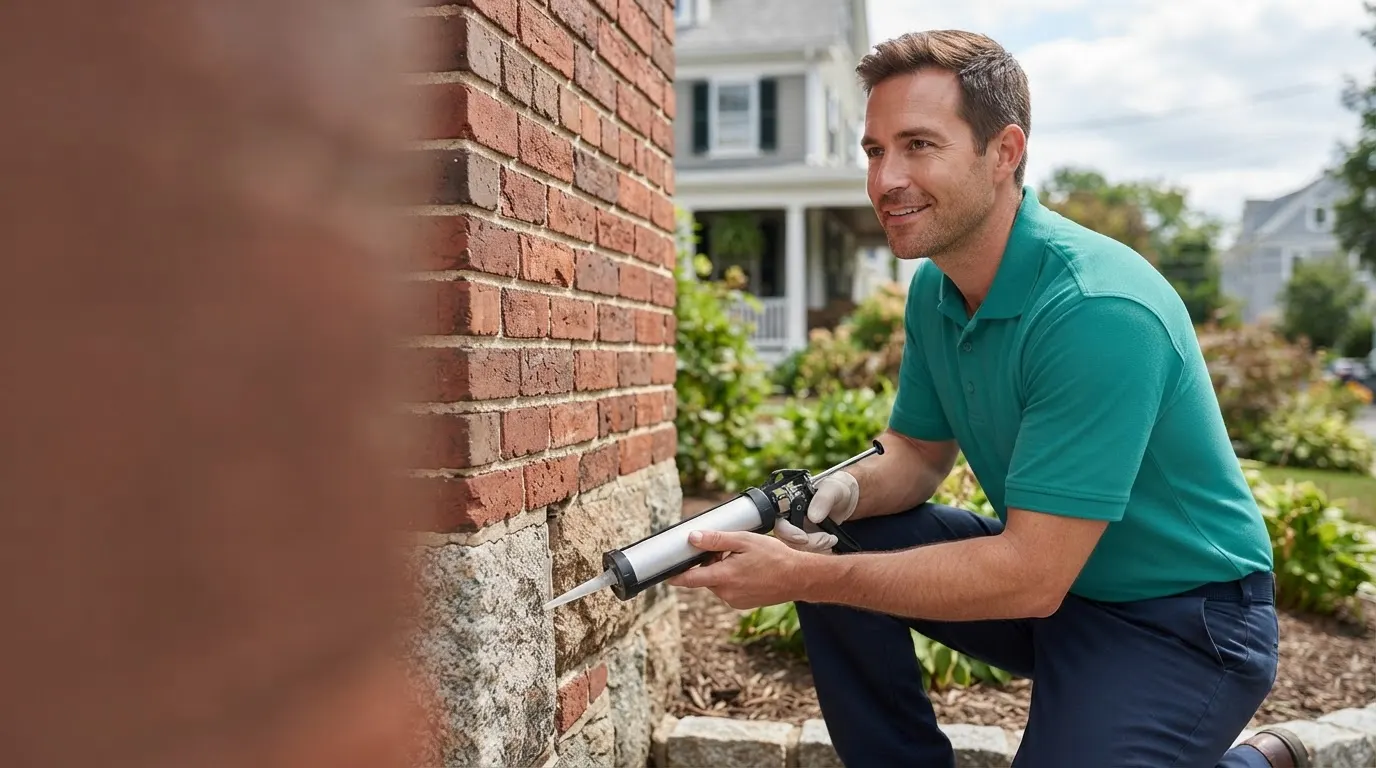
A pest control service in Boston is a specialized structural inspection, eradication, and physical exclusion process designed to eliminate biological infestations and seal historic architectural vulnerabilities across residential properties.
Every service reflects the same meticulous attention to detail, whether it's a single job or a larger pest control service project across Boston.
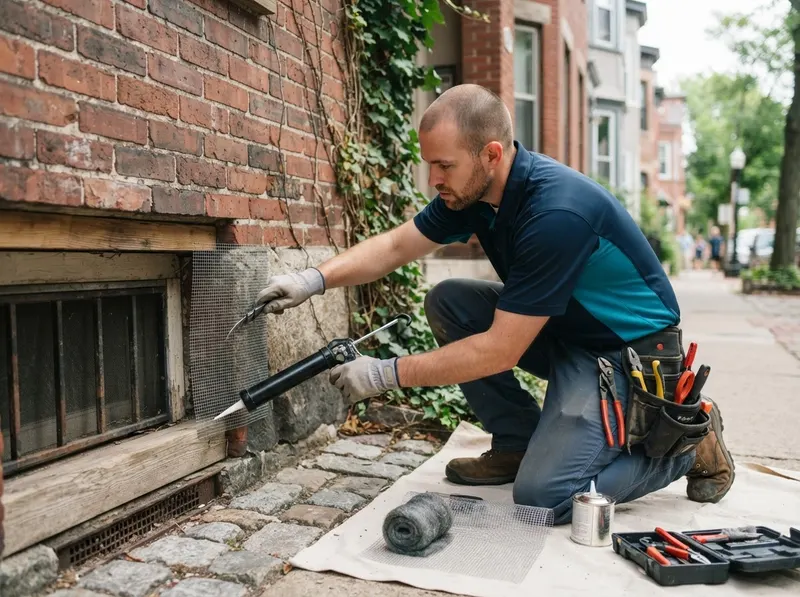
Complete structural rodent exclusion stops Norway rats (Rattus norvegicus) and house mice (Mus musculus) from exploiting antique rubble foundations, granite gaps, and hollow subfloor voids. Technicians thoroughly inspect the exterior perimeter, sealing gaps larger than 1/4 inch using 1/4-inch heavy-gauge galvanized steel hardware cloth, woven copper wire mesh, and high-performance commercial polyurethane elastomeric sealants. Entryways around low-elevation plumbing stacks, basement hopper windows, rotted bulkhead doors, and historic granite foundation ledges receive durable mechanical protection. Interior mechanical trapping runs concurrently using covered, tamper-resistant capture stations along foundational runs, floor joists, and dark utility corridors. This dual methodology eliminates resident indoor rodent populations safely without relying on rodenticides that cause animals to expire and decay behind inaccessible historic plaster-and-lath walls, safeguarding indoor air quality and structural integrity.
Get a quote →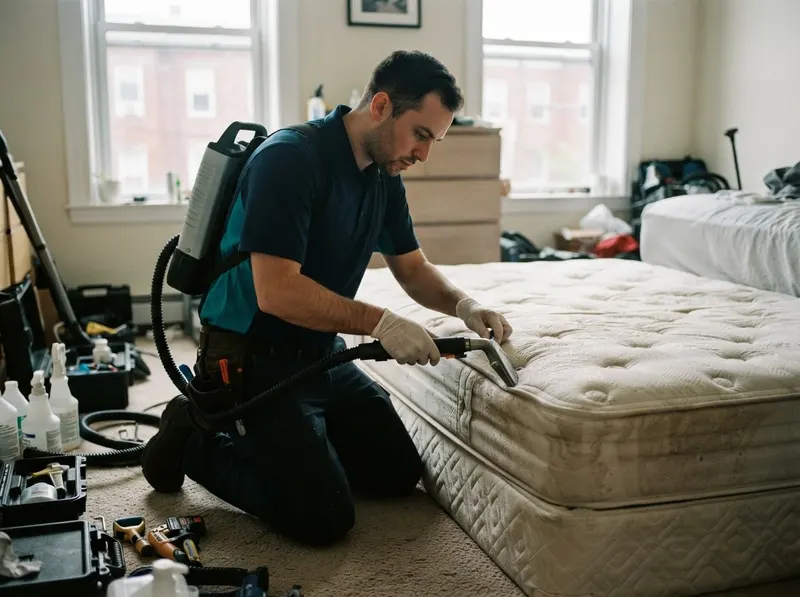
Comprehensive bed bug (Cimex lectularius) management uses targeted residual liquid applications, insect growth regulators (IGRs), precision localized heat equipment, and commercial HEPA vacuum extraction designed specifically for high-density multi-family residences. Shared brick party walls, wall cavities, hollow baseboard raceways, and electrical chases are treated using non-repellent dust formulations to prevent tenant displacement and stop adjacent apartment cross-contamination. Technicians perform exhaustive crack-and-crevice applications along mattress seams, upholstered bed frames, headboards, floor joints, and perimeter baseboards. Detailed post-treatment structural monitoring tracks ongoing activity through passive interception monitors, verifying egg, nymph, and adult mortality across all infested rooms to ensure complete biological eradication without damaging antique hardwood floors or historic wall surfaces.
Get a quote →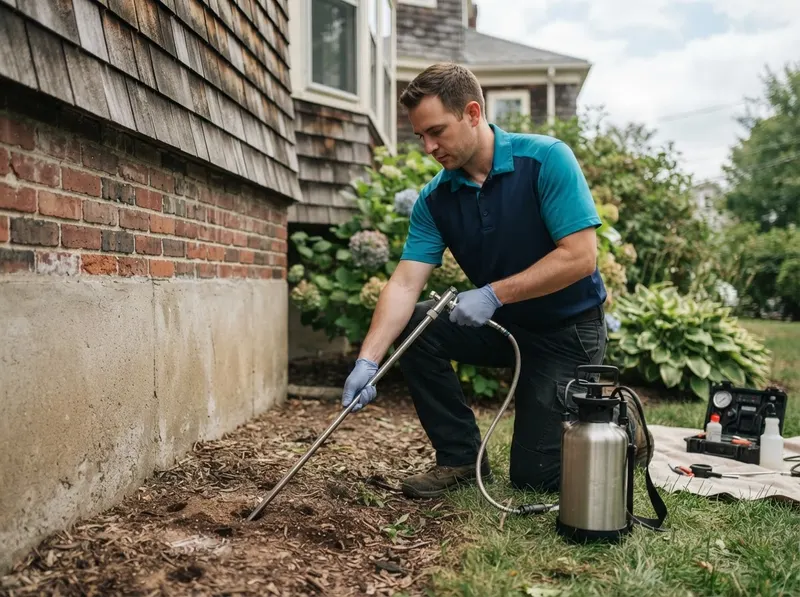
Targeted subterranean termite (Reticulitermes flavipes) elimination combines non-repellent liquid soil applications with advanced perimeter baiting matrices installed flush with ground surfaces. Technicians core-drill exterior masonry or trench exterior soil perimeter boundaries without chipping historic brick facades, antique granite steps, or decorative stonework. These slow-acting ingestion compounds disrupt termite molting cycles, using worker movement to distribute the active ingredient horizontally throughout the subterranean colony and queen chambers. Continuous perimeter monitoring stations provide early detection against subterranean moisture-seeking colonies before workers reach structural sill plates, floor joists, or interior framing timbers, preserving structural load-bearing woodwork in older residential structures.
Get a quote →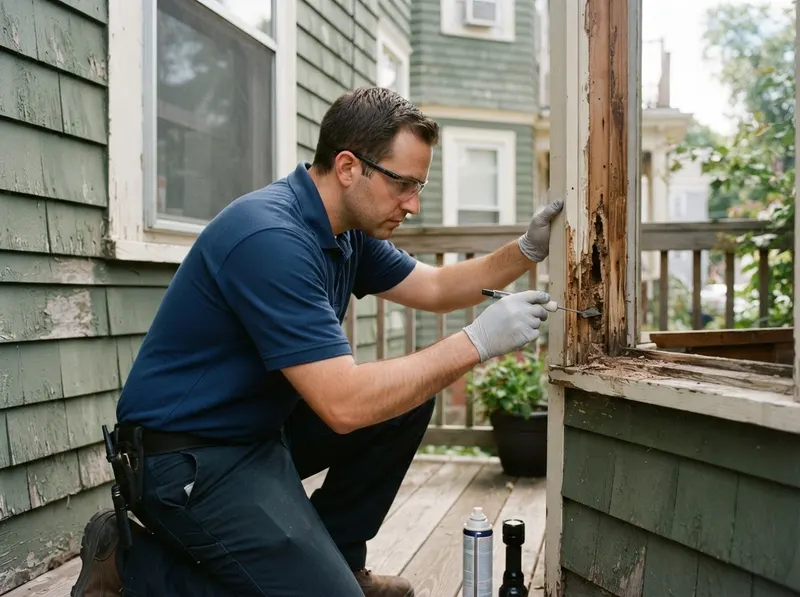
Carpenter ant (Camponotus pennsylvanicus) eradication locates and neutralizes both satellite and parent nests hidden inside moisture-compromised window casings, roof eaves, valley rafters, and bathroom subfloors. Specialized micro-injections apply targeted transfer baits and non-repellent insecticidal dusts directly into wall voids and structural framing without requiring destructive removal of original interior plaster walls, crown moldings, or period wood trim. Exterior foraging trails are intercepted using perimeter barrier treatments around foundation perimeters, deck attachments, and utility penetrations. Correcting conditions that attract satellite colonies protects structural framing timbers from progressive structural excavation and hollow gallery expansion.
Get a quote →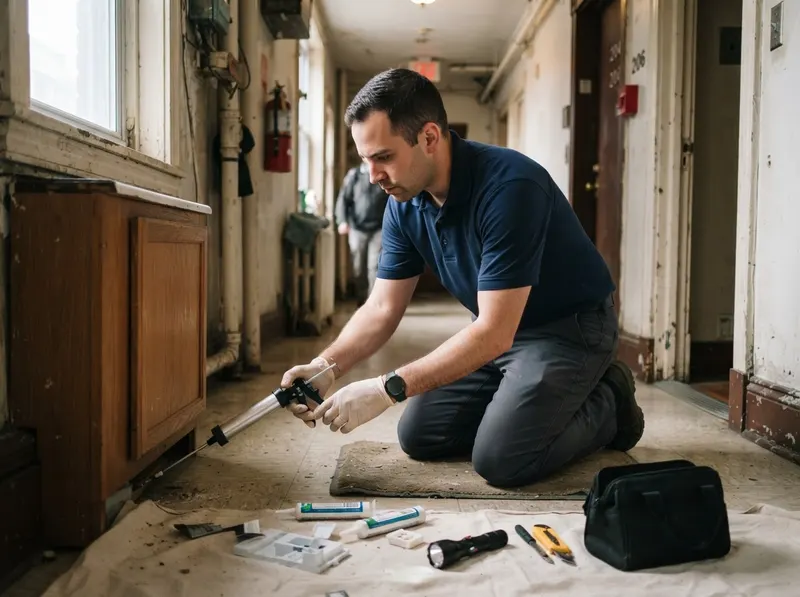
Intensive German cockroach (Blattella germanica) remediation resolves acute multi-family kitchen and bathroom infestations in older residential buildings. The service integrates insect growth regulators (IGRs), low-odor targeted attractant bait gels, and localized crack-and-crevice treatments around steam radiators, pipe risers, and shared plumbing stacks. High-efficiency mechanical vacuuming instantly extracts adult populations and visible egg cases, instantly reducing allergen loads and airborne particulate spread. Follow-up treatments refresh bait placements and disrupt reproductive cycles, preventing nymphs from maturing into reproductive adults and halting migration through common plumbing walls.
Get a quote →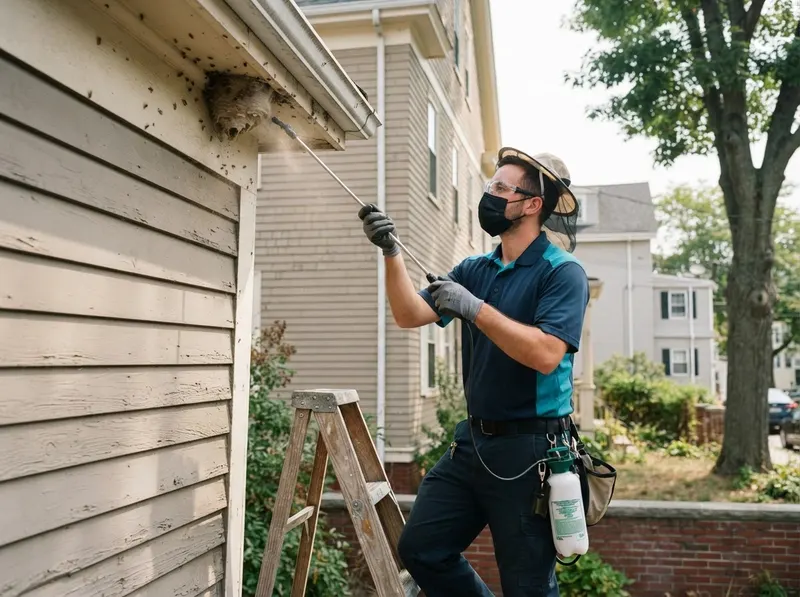
Protective stinging insect removal targets paper wasps (Polistes dominula), bald-faced hornets (Dolichovespula maculata), and ground-nesting yellowjackets establishing colonies beneath eave overhangs, roof dormers, porch soffits, and window pediments. Technicians neutralize active colonies using directional, low-drift aerosol contact agents and specialized telescopic dusting poles, followed by physical mechanical nest removal. Residual preventative deterrents applied to structural attachment points prevent territorial rebuilding throughout the summer and autumn months, protecting outdoor recreational decks, entry doorways, and pedestrian paths from territorial stinging hazards.
Get a quote →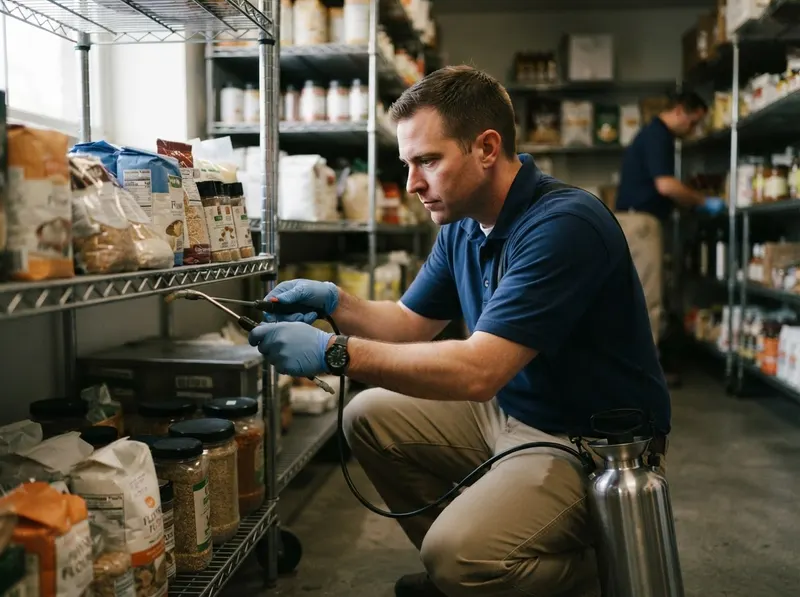
Stored product pest remediation addresses localized infestations of Indian meal moths (Plodia interpunctella), merchant grain beetles, and sawtoothed grain beetles within residential pantries and kitchen cabinetry. The service includes detailed pheromone trapping, physical inspection of dry food storage enclosures, precision void vacuuming, and targeted non-residual botanical applications in cabinet corners and base crevices. Technicians identify compromised pantry goods, recommend airtight storage protocols, and neutralize resting pupae tucked into shelf seams, ceiling corners, and panel joints to eliminate recurring generational hatchings.
Get a quote →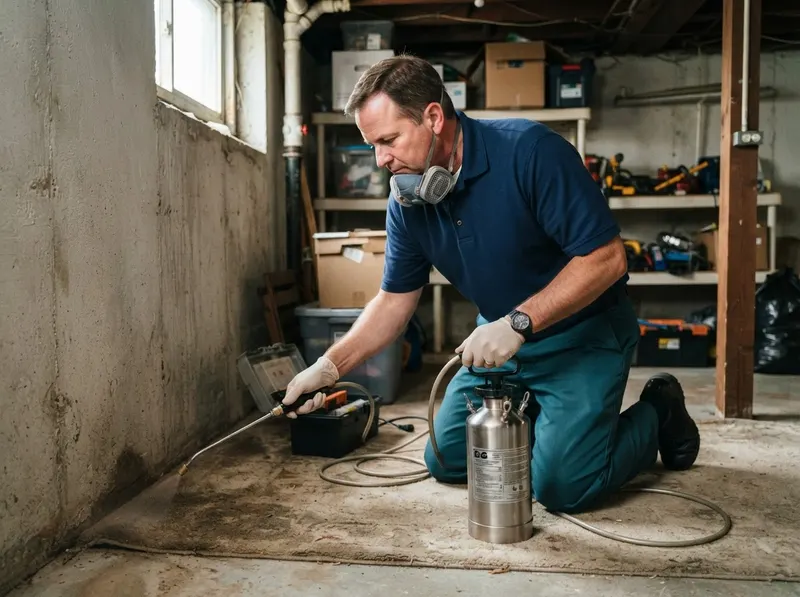
Targeted flea (Ctenocephalides felis) and tick remediation restores sanitation in residential living spaces, multi-family common areas, and damp basement sub-levels. Technicians combine active adulticides with residual insect growth regulators to halt egg hatching and larval pupation across carpets, rugs, hardwood crevices, upholstered furniture, and pet bedding zones. Targeted micro-mists penetrate deep into fabric fibers and flooring joints without staining antique flooring materials, while follow-up protocols address newly hatched pupae over a standard 14-day developmental cycle to deliver permanent population suppression.
Get a quote →You get a firm, itemized quote for your pest control service before any work begins, no surprises, no pressure.
Careful prep, tidy work, and a full cleanup when we are done. We treat your home and belongings like our own.
The same trusted, background-checked team from the first call to the final check.
If structural rodent infiltration originates through fieldstone basements, crumbling lime mortar, or deteriorating granite foundation blocks, choose physical masonry exclusion and wire barrier installation rather than relying on exterior rodenticide bait stations alone. If wood-destroying organisms penetrate structural floor sills, sill plates, or damp corner posts, choose targeted localized void injections or subterranean non-repellent perimeter bait barriers instead of broad exterior surface perimeter sprays. Choosing localized mechanical exclusion and precision void applications protects antique horsehair plaster, hand-planed tongue-and-groove hardwood, original wainscoting, and hand-hewn structural timber framing, whereas broad chemical surface sprays merely provide temporary pest population suppression without correcting the underlying architectural entry points.
The primary operational trade-off centers on upfront physical repair labor and masonry sealing costs versus the recurring, perpetual operational expense of monthly pesticide maintenance visits that leave structural entry corridors open indefinitely. For acute indoor parasite populations such as bed bugs or German cockroaches, localized low-odor insect growth regulators, precision gel matrices, and mechanical HEPA vacuum extraction resolve multi-unit infestations without dispersing insects deeper into shared party walls, whereas over-the-counter aerosol foggers scatter populations horizontally into neighboring units. Selecting targeted structural containment permanently stabilizes the living envelope, safeguards indoor air quality, and preserves the architectural fabric of New England residential properties.
Every project gets a firm, written price after a free on-site visit. Ranges below for orientation.
Tell us about your pest control service job and we'll send a clear, written quote, usually the same day. Or just call and talk to a real Boston pro.
(339) 463-4995
Boston’s distinct historic architecture presents complex structural vulnerabilities, ranging from the high water table and submerged timber pilings beneath Back Bay brownstones to the dry-laid fieldstone basements and granite footings of Charlestown and Beacon Hill row houses. Neighborhoods flanking major municipal park networks like the Arnold Arboretum, Boston Common, Franklin Park Zoo, and the Rose Kennedy Greenway experience steady seasonal rodent pressure, where outdoor populations migrate from public greenways into surrounding residential basements every autumn. The dense concentration of shared brick party walls and hollow balloon-frame cavities across the North End, East Boston, and South Boston allows crawling insects and mice to travel unobstructed along plumbing conduits, radiant steam lines, and chimney thimbles between multiple adjoining properties. Commercial transport arteries and historic waterfront thoroughfares, including Commercial Street, Atlantic Avenue, Tremont Street, Commonwealth Avenue, and Dorchester Avenue, generate severe structural vibration and soil displacement that fracture aging lime mortar joints over time, producing direct subterranean access routes into private residences. Furthermore, coastal proximity along Boston Harbor and the Charles River basin creates sustained ambient humidity that accelerates timber moisture retention in sills and joists, driving elevated subterranean termite foraging and carpenter ant nesting in older multi-story homes throughout Suffolk County.
Free estimates for Boston & the surrounding area.
 Laxora Exterminating