Residential rodent exclusion operates on the architectural reality of historic New England framing rather than the temporary suppression offered by chemical baiting. In urban centers like Boston, balloon framing allows…
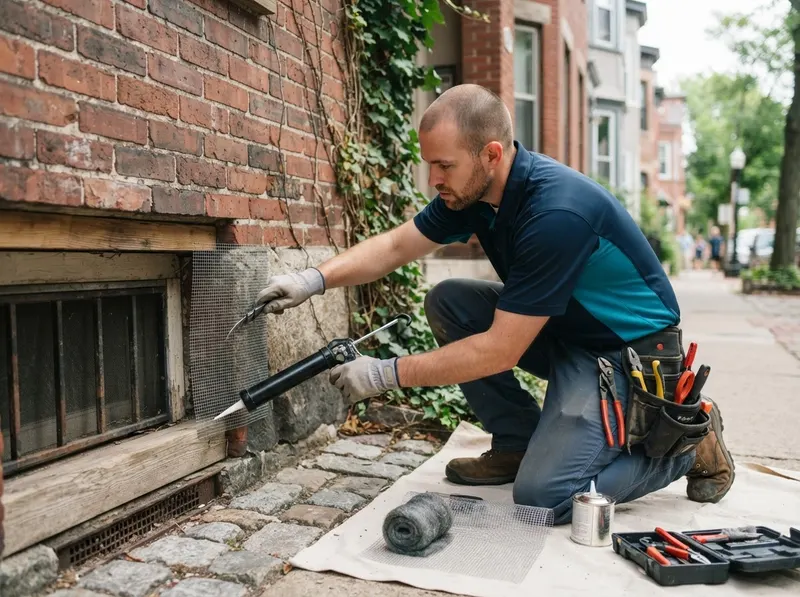
Residential rodent exclusion operates on the architectural reality of historic New England framing rather than the temporary suppression offered by chemical baiting. In urban centers like Boston, balloon framing allows rodents that breach an exterior foundation to travel vertically through uninterrupted wall bays directly into upper living spaces. In neighborhoods such as Beacon Hill and the North End, century-old rubble foundations and shared party walls deteriorate, producing quarter-inch gaps around gas lines, water pipes, and floor joists. Norway rats require an opening of only 0.5 inches to enter a cellar, while house mice penetrate gaps measuring 0.25 inches. Laxora Exterminating addresses these vulnerabilities by establishing a mechanical boundary, embedding galvanized hardware cloth into fieldstone mortar lines and wrapping sub-sill plates without compromising historical plaster, antique pine flooring, or original granite facades.
Selecting permanent physical exclusion over periodic bait station maintenance prevents toxic secondary poisoning risks for indoor pets in low-ventilation walkups throughout South Boston and Back Bay. While chemical rodenticides leave carcasses to decompose invisibly inside hollow wall partitions, mechanical exclusion isolates pests outside the building envelope. The operational trade-off requires upfront labor and masonry attention: homeowners invest in structural remediation rather than ongoing chemical subscriptions. In neighborhoods with high moisture retention and tidal pressure, such as East Boston and Charlestown, exclusion work specifically addresses exterior bulkhead doors, cellar vents, and coastal masonry voids that decay under freeze-thaw cycles.
Multi-family structures across Dorchester, Jamaica Plain, Allston, and Brighton often feature interconnected utility runs where plumbing retrofits have compromised fire stops. Step one involves tracing utility penetrations from the basement floor to the roofline, identifying rub marks and thermal bypasses. Step two entails filling structural openings with woven stainless steel mesh and non-shrink hydraulic masonry compounds. Step three installs heavy-gauge perimeter metal flashing along gnawed threshold sills. Because Laxora Exterminating never relies on unvetted subcontractors, all exclusion installations adhere to historic preservation requirements while sealing out subterranean pests permanently.
Every job gets a firm, written price after a free on-site visit.
Tell us about your residential rodent exclusion job in Boston and we'll send a clear, written quote, usually the same day.
 Laxora Exterminating