Carpenter ant infestations across Suffolk County target soft, damp lumber rather than consuming sound wood fibers. In historic neighborhoods like Beacon Hill, Back Bay, and the North End, century-old balloon framing…
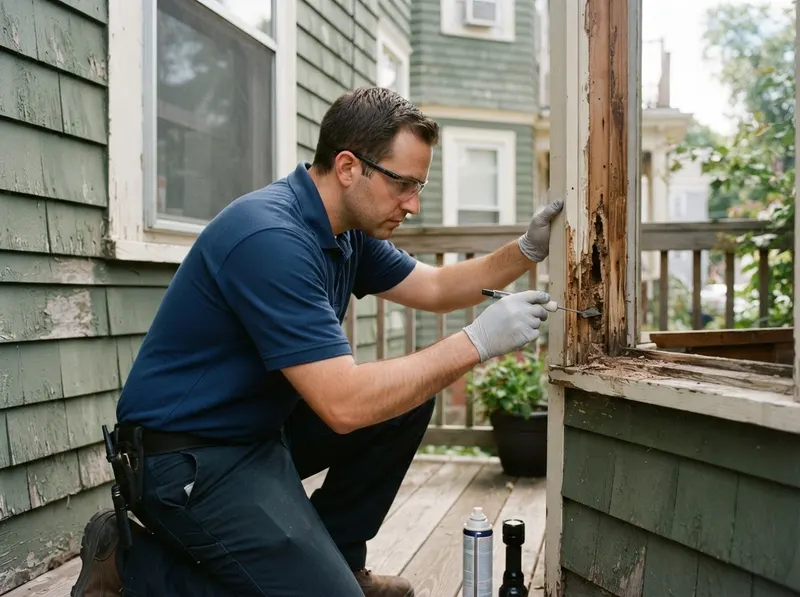
Carpenter ant infestations across Suffolk County target soft, damp lumber rather than consuming sound wood fibers. In historic neighborhoods like Beacon Hill, Back Bay, and the North End, century-old balloon framing creates continuous, unblocked vertical channels from rubble-stone basements straight to rooflines. When gutter systems overflow or roof flashings fail near dormers, rainwater saturates inner timber plates. Parent colonies establish primary moisture hubs near damp sill plates, while satellite colonies, housing mature larvae and workers without a queen, expand into dry structural bays, floor joists under kitchen plumbing, and lathe cavities behind lime plaster. Surface sprays fail to eliminate these interior networks because parent queens remain hidden deep within structural framing.
Selecting structural cavity abatement instead of general perimeter spraying prevents long-term timber loss. Standard surface insecticides repel foragers, forcing colonies to fracture into multiple satellite zones within the same wall framing. Laxora Exterminating uses micro-drilling techniques, utilizing 1/8-inch access points into baseboard interfaces or unseen framing seams, to deliver non-repellent transfer agents directly into active nesting galleries. For properties near the Arnold Arboretum in Jamaica Plain or harbor-adjacent walkups in East Boston, coastal humidity accelerates wood decay, requiring both void elimination and foundation masonry barriers. If framing shows coarse wood shavings resembling sawdust, known as frass, alongside dead insect parts, active gallery excavation is occurring inside structural members; if sawdust is fine and powdery without insect fragments, the damage relates to powderpost beetles rather than ants.
Step 1 involves acoustic and thermal moisture tracing to locate concealed nest voids along wall cavities and foundation sills. Step 2 requires precision-drilling minimal-impact access ports into concealed trim junctures to deliver targeted materials into active galleries without harming historic plaster, original moldings, or wide-plank pumpkin pine floors. Step 3 applies a targeted foundation perimeter band to arrest outdoor foraging trails moving between yard trees and exterior siding. Step 4 consists of identifying specific structural moisture leaks around chimney flashings, downspouts, and unventilated dirt crawlspaces that sustain wood decay fungi.
Every job gets a firm, written price after a free on-site visit.
Tell us about your carpenter ant structural abatement job in Boston and we'll send a clear, written quote, usually the same day.
 Laxora Exterminating