Historic architecture across Boston presents unique shelter opportunities for stinging colonies during early summer establishment. In neighborhoods such as Beacon Hill and the North End, mortar deterioration between…
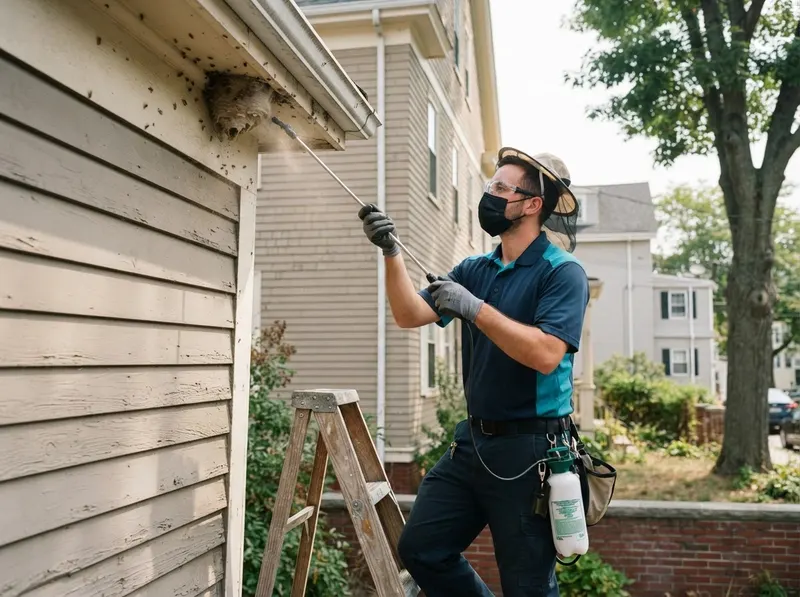
Historic architecture across Boston presents unique shelter opportunities for stinging colonies during early summer establishment. In neighborhoods such as Beacon Hill and the North End, mortar deterioration between antique fieldstone and unpointed brick courses allows German yellowjackets to construct subterranean cavities inside structural party walls. Baldfaced hornets prefer higher anchorages, frequently fastening carton nests beneath the overhanging eaves of three-decker properties in Dorchester and Jamaica Plain. Left unmanaged, these colonies expand to contain 1,500 to 5,000 workers by August, forcing their way into interior living spaces through radiator pipe clearances, window trim gaps, and floor joist junctions.
Eradication requires a distinct technical sequence depending on nest containment. Aerial paper wasp clusters hanging from open porch ceilings in South Boston or Charlestown allow direct mechanical knockdown and surface residual applications that deter subsequent paper construction. Conversely, concealed infestations inside historic slate roof trim, brownstone cornices in Back Bay, or wood soffits in Brighton demand targeted micro-granule dusting or pressure injection directly into the entry aperture. Spraying over-the-counter liquid insecticides into external masonry weep holes often repels the insects inward, driving thousands of disoriented stinging insects through electrical switch boxes and baseboards into occupied bedrooms.
Structural exclusion follows primary chemical mortality to prevent seasonal reoccupation. Once technicians verify zero foraging activity at the entry point, typically within 24 hours of primary dusting, the void entry is cleared of comb detritus and sealed. Laxora Exterminating installs stainless steel mesh, breathable copper wire packing, and color-matched silicone elastomeric sealants designed to breathe alongside century-old masonry while halting queen re-entry. In harbor-facing zones like East Boston, where marine moisture accelerates mortar softening, exterior treatments pair insecticidal removal with localized barrier shielding along weather-beaten wood trim and porch headers.
Every job gets a firm, written price after a free on-site visit.
Tell us about your exterior stinging insect removal job in Boston and we'll send a clear, written quote, usually the same day.
 Laxora Exterminating