Silverfish (*Lepisma saccharinum*) and firebrats (*Thermobia domestica*) systematically digest the carbohydrates found in historical construction materials, targeting wallpaper paste, antique book collections,…
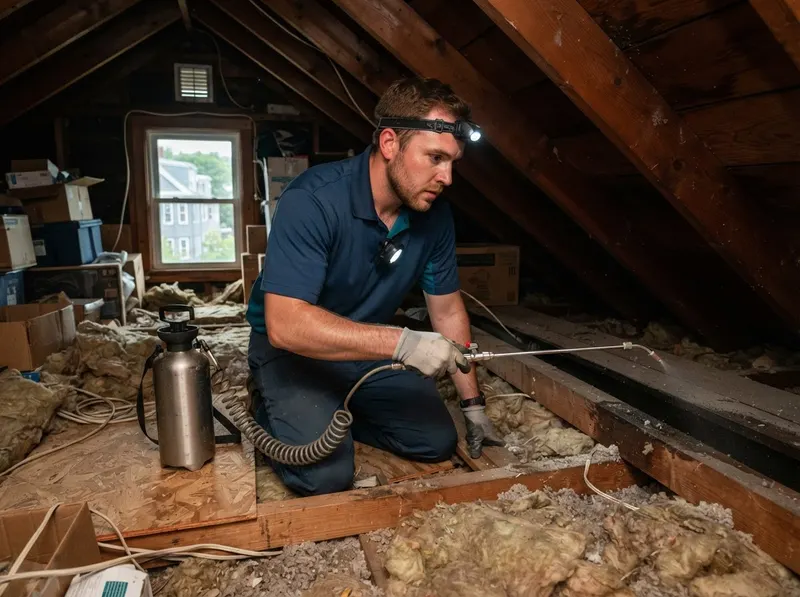
Silverfish (*Lepisma saccharinum*) and firebrats (*Thermobia domestica*) systematically digest the carbohydrates found in historical construction materials, targeting wallpaper paste, antique book collections, structural starch binders, and modern blown-in cellulose insulation. In Boston's dense residential zones, these Thysanura micro-pests exploit building infrastructure differences. Firebrats require ambient temperatures between 90°F and 106°F, congregating around uninsulated brick chimney chases, steam boiler pipes, and third-floor ceiling expanses in Back Bay brownstones or Charlestown townhomes. In contrast, common silverfish flourish where roof micro-leaks, slate-shingle seepage, or ice-dam runoff produce relative humidity levels exceeding 75% inside upper joist bays.
Controlling these insects inside Boston housing stock requires strict differentiation between biological conditions. Over-the-counter chemical foggers fail because aerosol droplets settle exclusively across horizontal attic flooring without reaching deep wall voids, masonry cracks, or the internal cavities of balloon-framed outer walls found in Victorian multi-families throughout Dorchester, South Boston, and Jamaica Plain. Furthermore, broad liquid spraying can stain heritage pine floors, warp original baseboards, and leave chemical residue that migrates downward into living rooms and nursery spaces in unventilated historic homes. Laxora Exterminating applies micro-injected desiccant dusts, including natural diatomaceous earth and amorphous silica, directly into hidden wall junctions, sill plates, and rafters. These non-volatile compounds physically breach the insect's protective waxy lipid layer, causing dehydration within 48 to 72 hours without emitting volatile organic compounds into enclosed residential spaces.
Decision-fit considerations depend on current attic ventilation and moisture intrusion. If an attic harbors standing moisture or active roof leaks, installing non-chemical targeted insect monitor traps and void minerals provides containment, but true long-term eradication requires exterior envelope repairs to stabilize indoor relative humidity below 50%. A focused attic spot treatment handles small populations confined to a specific storage closet or dormer wall, whereas an integrated whole-envelope dusting and exterior eave exclusion is needed when micro-invertebrates begin traveling downward via chimney flues and lath plaster into bedrooms across East Boston multi-family walkups and North End multi-story apartments. The operational trade-off centers on non-chemical habitat alteration: lower moisture levels permanently halt reproduction, while structural dusting protects the immediate structural paper and wood assets.
Every job gets a firm, written price after a free on-site visit.
Tell us about your attic silverfish and firebrat control job in Boston and we'll send a clear, written quote, usually the same day.
 Laxora Exterminating