Historic architecture across Boston presents unique microclimates that foster persistent spider populations. Unfinished fieldstone basements in Dorchester triple-deckers and granite rubblestone foundations throughout…
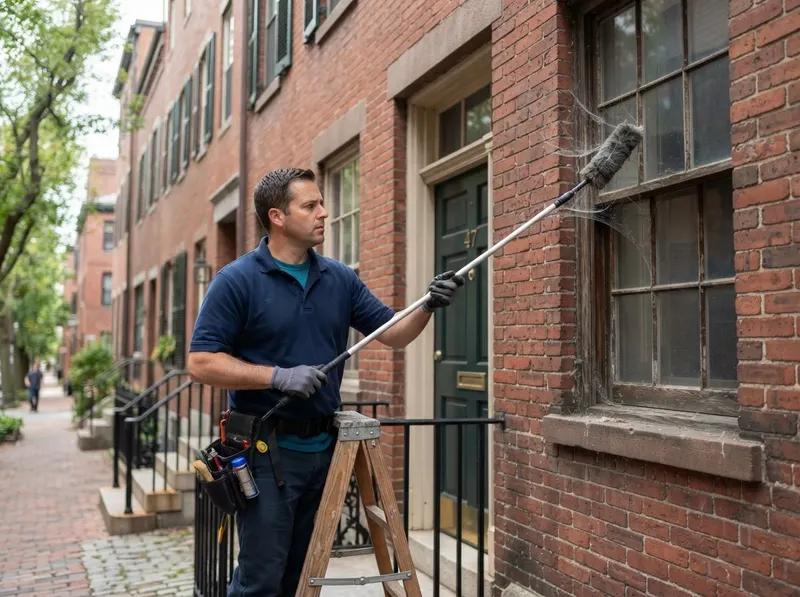
Historic architecture across Boston presents unique microclimates that foster persistent spider populations. Unfinished fieldstone basements in Dorchester triple-deckers and granite rubblestone foundations throughout Beacon Hill and the North End maintain steady relative humidity levels above 60%, drawing prey insects like booklice, silverfish, and fungus gnats. Laxora Exterminating clears arachnids from these environments using non-abrasive mechanical extraction rather than broadcast liquid chemicals that could mar original heart-pine flooring or historic plaster. Hand de-webbing with electrostatic extension poles reaches 14-foot parlor ceilings in Back Bay brownstones, while high-efficiency particulate air (HEPA) vacuum units collect viable egg sacs from masonry crevices without dispersing allergen-bearing dust through shared party walls.
Mechanical clearing fits residences where chemical pesticide residues cannot be tolerated, such as enclosed Charlestown row houses or historic multi-family apartments with companion pets and minimal cross-ventilation. Over-the-counter surface sprays frequently fail because house spiders walk on specialized tarsal claws that limit contact with treated horizontal surfaces. Clearing the physical web network disrupts the arachnid reproductive cycle; a single female common house spider can deposit up to 12 egg sacs containing roughly 250 eggs each over a summer season. The operational trade-off requires combining interior clearance with perimeter exclusion: physical extraction immediately resolves the visible visual burden, while caulking exterior brick penetrations prevents late-autumn migrations.
Structural exclusion reinforces the interior de-webbing process. Gaps surrounding iron pipes, basement utility conduits, and settling floorboards along Jamaica Plain and South Boston streetscapes receive breathable brass mesh and elastomeric compounds. Laxora Exterminating assesses the property in three steps: 1. Perimeter inspection of exterior sills, granite footings, and ornate roof brackets. 2. Interior mechanical extraction of webs, egg masses, and dead prey from baseboards, crown mouldings, and cellar joists. 3. Targeted exclusion along utility penetrations and window sash counterweight pockets to suppress re-infestation routes.
Every job gets a firm, written price after a free on-site visit.
Tell us about your historic house spider and web clearing job in Boston and we'll send a clear, written quote, usually the same day.
 Laxora Exterminating